Hail to the King, Baby. Now Kiss Me
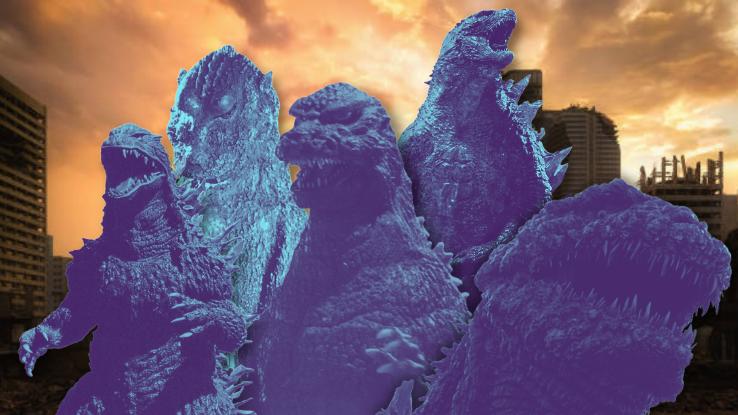
At that place's only 1 Male monarch of the Monsters, and his proper name isn't Kong. Godzilla proved that when he trounced that supersized ape (2 times!) in Godzilla vs. Kong (2021). Every bit yous can tell, we're big fans of the Greyness Gecko. And we're not lonely; millions of people around the earth take been fascinated with Godzilla since his black-and-white characteristic picture debut in 1954.
The king's done it all since then; he's appeared in dozens of movies, several Telly shows, numerous comic books, and a column of video games. Last but not to the lowest degree, he'southward the main attraction at the almanac G-Fest convention. Today is Godzilla'southward 67th birthday; 67 years of smashing buildings, punching out other monsters and cementing his place as a pop civilisation icon. We're looking back at Godzilla'due south harrowing origins and celebrating his enduring legacy.
1954: Godzilla's First Cinematic Assail
Do yous ever wonder who came upwardly with the thought of Godzilla in the kickoff identify? A Japanese producer named Tomoyuki Tanaka created the creature for the Toho Company, Ltd. Simply monetary gain was far from Tanaka's simply inspiration; Godzilla is a product of his time… and he's a product of World War II.
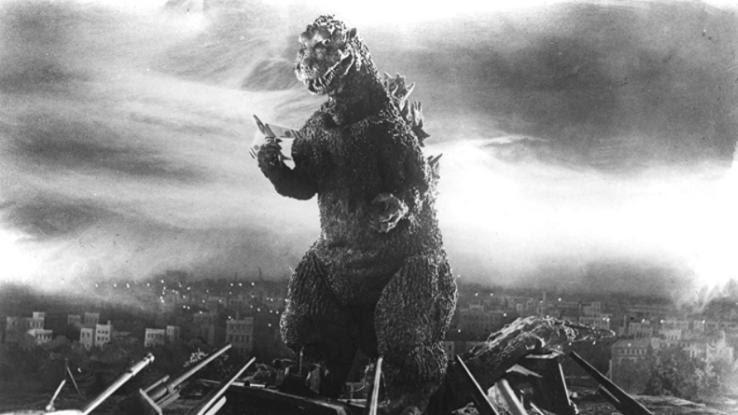
From its primeval days in the 1920s, America's Universal Studios enjoyed massive success with a stream of at present-classic monster movies that lasted well into the 1950s. From features helmed by Frankenstein (or, yous know, Frankenstein'southward Monster) and Dracula to the Animate being from the Blackness Lagoon, audiences couldn't get enough of things that went bump in the nighttime. And, of class, King Kong had likewise been some other heavy-hitter since his debut in 1933.
Monsters were large, figuratively and literally, so it only fabricated sense for Tanaka to develop a monster film for Toho. Tragedy struck Japan in August 1945, when the United states deployed two diminutive bombs on Hiroshima and Nagasaki. These incidents compelled Tanaka to create a animate being that embodied the subversive strength of the cantlet bomb — one that could level cities in the blink of an eye and reduce hapless citizens to ashes.
Moreover, during another incident in 1954, a Japanese fishing boat,Lucky Dragon Number 5, met with disaster when it was exposed to a nuclear test that killed one coiffure member and sickened the rest. At the fourth dimension, the fear of nuclear destruction was alive and well in the globe — and, perhaps, nowhere was this anxiety felt equally strongly as in Japan.
Enter Godzilla; a titanic terror covered caput to toe in keloid scars and powered by radiations. From his formulation, Godzilla symbolized the horrors of state of war and the hurting, fright, and desperation that Japanese citizens experienced during World War Two.
Godzilla made his premiere when his cocky-titled feature pic debuted in Japan on November 3, 1954. While the film was met with mixed reviews from critics, it enjoyed a friendlier reception from audiences, grossing ¥183 million ($1.6 million) during its initial run.
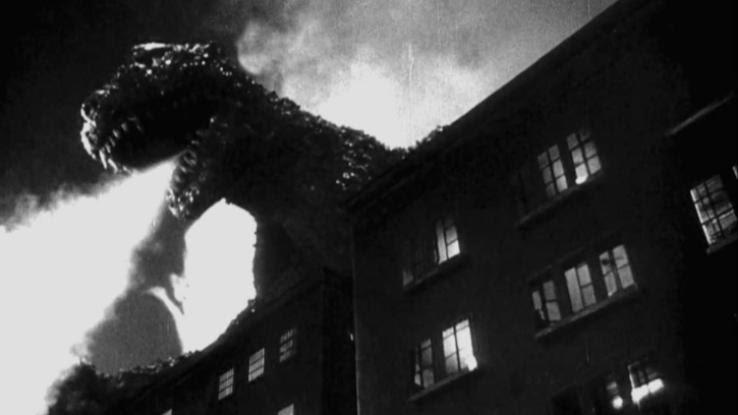
Only why would Japanese audiences embrace a creature designed to symbolize the horrors of their nation's past? In essence, for the aforementioned reasons Americans were enjoying their own blend of monster movies. People have always been drawn to tragedies that unfold onstage. In fact, Aristotle even theorized that stories are capable of purging negative emotions like pity and fright from audiences.
While the original black-and-white feature lacks modern VFX, it was an astounding technical feat at the time. This is peculiarly truthful considering that special furnishings director Eiji Tsuburaya wasn't able to apply the same stop-motion animation techniques pioneered by American movies like King Kong. At the time, Japan just didn't have enough people who were experienced in the technique to pull off a full-length feature movie in a reasonable amount of time.
After realizing that end-motion blitheness could take upwards to seven years to implement due to his limited resources, Tsuburaya ended upwards pioneering "suitmation". For those who don't know, suitmation involves an histrion dressing upwardly in a adjust and interim like the monster — which is, in some ways, a forerunner to motility-capture performances. The result was a success in its time;Godzillawent on to spawn a new genre of Japanese monster movies known as Kaiju cinema.
Godzilla Arrives in the The states
Toho Studios was quick to follow upward on the initial success of the first Godzilla with 1955's Godzilla Raids Once more. When the studio realized they had quite a success on their hands, Toho somewhen released a heavily "Americanized" version of the moving-picture show called Godzilla, King of the Monsters!, in 1956.
While Godzilla'south popularity grew to match his larger-than-life status in the United States, the monster largely remained a Japanese import for decades. In fact, it wasn't until 1998 that the first American Godzilla motion-picture show was released past Tristar Pictures.
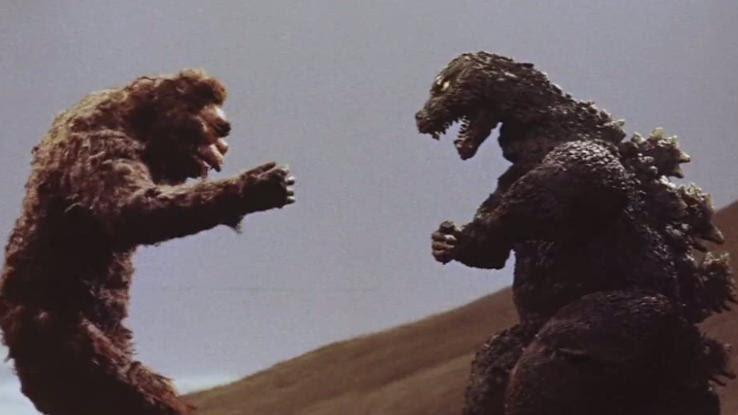
Whereas the first Godzilla was a articulate horror motion-picture show, complete with radiation poisoning and families mourning the loss of loved ones, Godzilla Raids Over again introduced a new concept. While nonetheless a terrifying prospect in his own right, Godzilla also met a foe of his own size in the follow-up movie. In some ways, this situated Godzilla equally a protector of sorts — taking aim at another destructive animal instead of a densely populated city.
Godzilla Raids Once more marks the first advent of Anguirus, some other giant monster who would somewhen develop a friendly relationship with the Large Thou. New allies and unsafe enemies would become recurring elements in Godzilla'south subsequently movies. Over the years, Godzilla would boxing sentient chemical waste product, supersized plants, a whole host of cybernetic beasts, and of course King Kong.
The Americanization of Godzilla
When American studios tried releasing a Godzilla movie in 1998, the cease result left a great deal to be desired. Largely considered a box office flop, the U.S. version of Godzilla presented a beast who, although initially awakened by a nuclear blast, largely abandoned the diminutive symbolism that had hitting home with before audiences.
Instead, the new, AmericanizedGodzilla was a CGI monstrosity that spent about of its time hiding from the military. Gone was whatsoever semblance of global nuclear feet (or deeper meaning of any kind). In 2014, Legendary Pictures decided to give Godzilla another shot with the release of a brand new feature film.
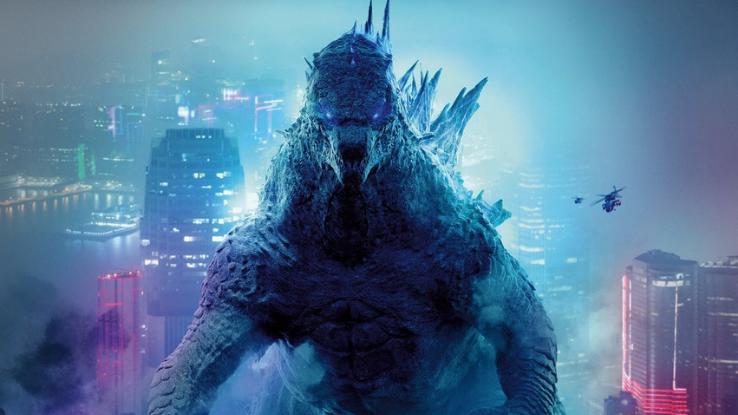
The 2014 version went back to the monster's radioactive roots, but also put some timely new metaphors into play. As director Gareth Edwards explained, "In our film, Godzilla represents a force of nature. The theme of man vs. nature creeps upward a lot visually throughout the moving picture."
The pic was a blockbuster that spawned two direct sequels — Godzilla: King of the Monsters (2019) and Godzilla vs. Kong (2021) — and kicked off the Legendary Pictures MonsterVerse. Godzilla is less of a clear-cut symbol of devastation in these films. Instead, he'due south presented every bit a mythical creature that restores residual to an ecosystem that humans have ravaged.
While doubtlessly still terrifying, Godzilla, who himself has been viewed as both a destroyer and protector at diverse times in his career, continues to serve as a reminder that abusing everything from the environs to nuclear power tin can have devastating consequences. It's perhaps an unexpected legacy, but, without a doubt, one that endures.
Source: https://www.ask.com/entertainment/history-of-godzilla?utm_content=params%3Ao%3D740004%26ad%3DdirN%26qo%3DserpIndex
0 Response to "Hail to the King, Baby. Now Kiss Me"
Post a Comment